
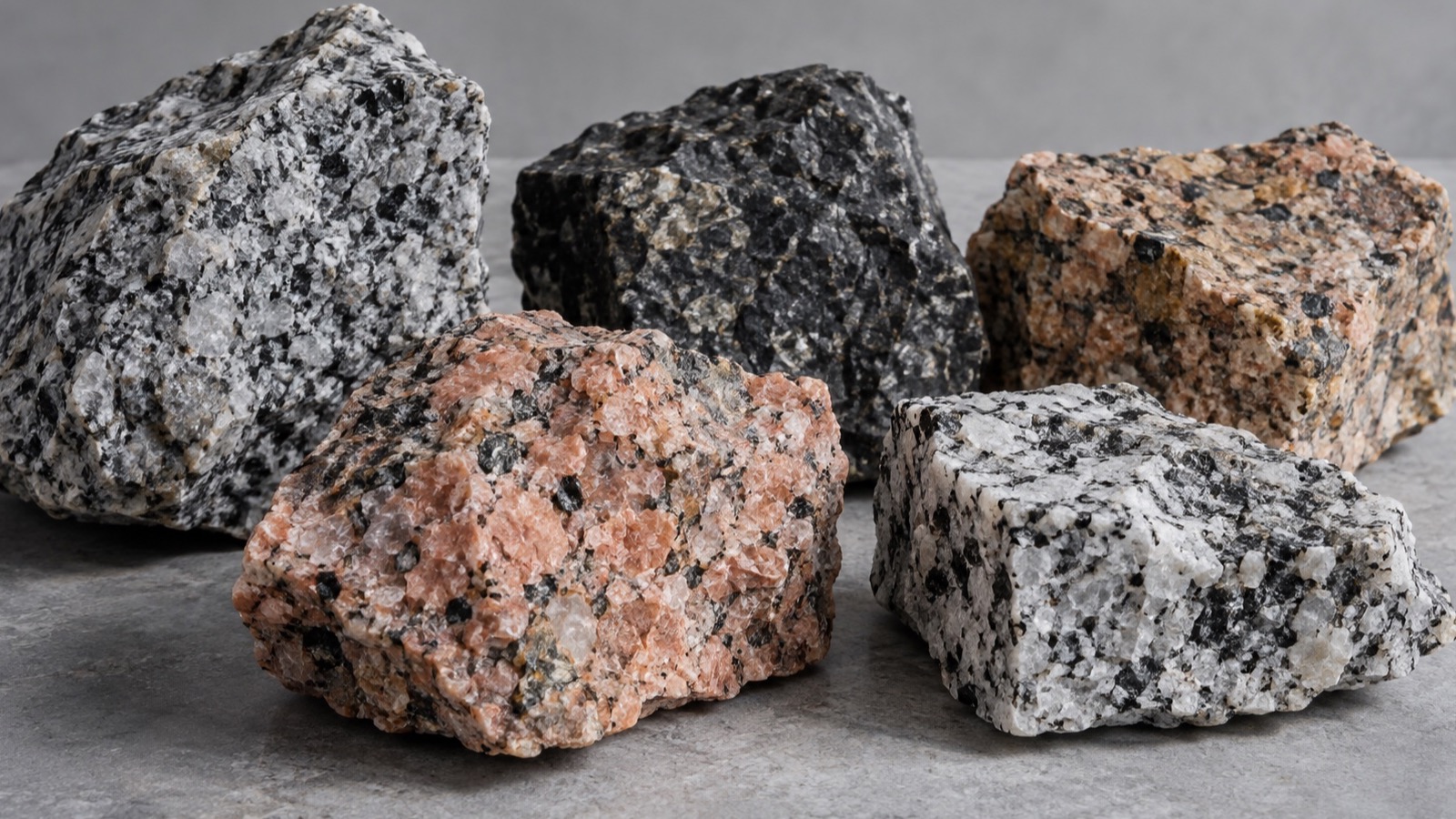
Granite is chosen because it can combine a durable mineral structure with a wide range of colors, textures and finishes. In the dimension-stone trade, however, “granite” is broader than a strict geological name. It can include several hard, crystalline rocks sold and fabricated in similar ways. The practical decision is therefore not whether a label sounds familiar, but whether the identified material, tested properties, finish, thickness and installation system suit the intended use.
What granite means in a specification
The U.S. Geological Survey defines dimension stone as natural rock quarried into blocks or slabs that meet requirements for size and shape. It identifies color, grain, pattern, surface finish, durability, strength and polishability as normal selection factors. That definition is useful because it separates an architectural product from crushed aggregate and shows why an appearance name alone is incomplete. Commercial granite may cover true granites and other visibly crystalline rocks. Record both the trade identity used by the supplier and any geological description supported by reliable testing or petrographic examination.
G-numbers and English names used for Chinese stone are commercial identifiers. They can be helpful for finding candidates, but markets sometimes apply one name to more than one source or replace a depleted source with a visually similar material. Ask the supplier to state the quarry region, block or batch reference and whether the sample represents current production. Do not infer quarry activity or long-term availability from an old catalog.
Properties that matter
Performance is application-specific. Water absorption and density help describe pore structure and weight; compressive and flexural properties may matter in engineered assemblies; abrasion resistance matters under foot or vehicle traffic; freeze-thaw durability matters where saturated stone cycles through freezing conditions. ASTM C615/C615M provides a material specification framework for granite dimension stone, but a standard designation is not a substitute for project design. Confirm the current edition required by the contract and obtain reports for the actual material family.
Past service can add useful evidence when the stone, finish, thickness, exposure and installation resemble the proposed work. It does not prove that a new batch is identical. Combine project-specific design with representative testing and documented visual approval.
Color, grain and natural variation
Granite color comes from its mineral mix and structure. Light grey and white materials often show visible feldspar and quartz; black commercial granites may be geologically different rock types; red, pink, yellow and brown appearances can reflect feldspar color or iron-bearing alteration. Veins, clusters, dark minerals, micro-fissures and occasional inclusions may be natural features rather than fabrication defects. The contract should distinguish acceptable variation from open cracks, unstable areas, unacceptable repairs or contamination.
Evaluate color over an area large enough to reveal movement and range. For floors, facades and long runs, a dry layout or elevation map can prevent accidental concentration of darker or lighter pieces. View polished material in consistent lighting because reflection can exaggerate differences.
How finish changes appearance and use
Polishing usually deepens color and creates strong reflection. Honing reduces reflection and can make color look softer. Flaming, bush hammering and some blasting processes create a rougher, lighter-looking face and may expose more variation. The same stone can therefore appear like several different products. Finish also affects cleanability, edge appearance, thickness control and underfoot behavior.
Never treat a finish name as a numerical slip-resistance value. If pedestrian safety is relevant, specify the intended test, wet or dry condition, specimen preparation and acceptance basis with the project professional. Samples should show the actual finish on the selected stone, not the finish on an unrelated reference material.
Where granite is commonly used
Granite dimension stone is fabricated into slabs, tiles, pavers, kerbs, steps, cladding, monuments and custom pieces. Interior counters often favor a smooth, cleanable finish. Exterior paving commonly needs a textured face, suitable drainage and a designed base. Cladding requires engineering of anchors, joints and support. Product thickness cannot be selected from a generic table alone because spans, loads, panel geometry, stone variability and the installation system all matter.
Care and realistic expectations
The Natural Stone Institute classifies granite as generally siliceous and recommends mild cleaners intended for stone. Abrasive powders can scratch some finishes, and hydrofluoric acid attacks silicate minerals. An impregnating treatment may improve stain resistance but does not make stone stain-proof. Test any treatment on an inconspicuous sample, remove spills promptly and follow the product and fabricator instructions.
Turn the selection into a measurable specification
A trade name, photograph or sample is a starting point, not a complete order. Record the approved material name, quarry or block reference when available, surface finish, nominal and minimum thickness, face dimensions, edge work, dimensional tolerances, visual range, repair policy, quantity, spare allowance, packing and labeling. State which measurements will be checked, how many pieces form the inspection sample and what happens when a result falls outside the agreed limit.
Natural stone varies. A sensible approval defines an acceptable range rather than asking production to match one small photograph. Review multiple full-size samples or a dry layout when appearance continuity matters. Keep the signed sample and dated photographs available to the factory and destination inspector. For performance-sensitive work, ask for recent reports from representative material and identify the test method; a generic claim that granite is “strong” does not establish suitability for a particular assembly.
| Control | Record before production | Verify before shipment |
|---|---|---|
| Identity | Trade name, source and approved range | Labels and production match approvals |
| Geometry | Dimensions, thickness and tolerances | Measurements across a defined sample |
| Finish | Process, sheen or texture reference | Consistency under normal lighting |
| Fabrication | Edges, cut-outs, repairs and reinforcement | Workmanship and critical locations |
| Packing | Crate design, sequence and marks | Dry stone, protection and count |
Buying and approval checklist
- Ask the seller to distinguish quarry origin, processing location and shipment origin.
- Approve representative samples and retain a signed control sample.
- Put measurable tolerances and visual criteria on the purchase order.
- Confirm test methods and report dates for performance claims that affect the project.
- Inspect a first piece before full production and a defined sample before shipment.
- Match packing, crate marks and piece labels to the installation sequence.
- Keep a reasonable spare allowance for natural variation, cutting and future repair.
These controls do not remove variation or project risk. They create a record that lets the buyer, fabricator, installer and inspector evaluate the same requirements. Local building codes, engineering requirements and installation-system instructions remain controlling for the finished work.
Frequently asked questions
What should buyers verify before ordering granite guide?
Verify the exact material and source, current representative samples, finish, dimensions and tolerances, relevant test evidence, repairs, packing, inspection plan and complete commercial terms.
Does a trade name or country guarantee performance?
No. Natural stone properties and factory controls vary. Evaluate the actual material, batch, finish, thickness and installation conditions with project-specific evidence.
How should natural variation be approved?
Review multiple representative pieces or full slabs, define an acceptable range, retain signed samples and record how veins, mineral clusters, fissures, fills and repairs will be judged.