
A rust-coloured mark on granite needs a source investigation before treatment. Metal objects, contaminated water or other external materials may leave deposits; some stones also contain iron-bearing components that can change under particular conditions. Colour alone does not establish which process has occurred on an installed surface.
Record the location, moisture history, nearby metal and any previous products used. Photograph the mark in context and avoid adding a sealer or aggressive rust remover before the stone and treatments are identified. This guide does not diagnose a mineral from a photograph or promise permanent stain removal.
Look for an external source first
Note whether the mark follows a metal foot, container, fastener, fitting or water path. Record known changes, leaks or outdoor exposures. If an external source is identified, ask the appropriate contractor how to correct it; cleaning the mark while the exposure continues may not resolve the problem.
Do not dismantle fittings, excavate a fixing or disturb supported stone to investigate. Keep the observation and the suspected cause separate until an appropriate professional can examine the assembly where necessary.
Separate a deposit from a change within the stone
The Natural Stone Institute’s care guidance is a starting point for stain identification and compatible treatment. An orange or brown area may require investigation beyond ordinary cleaning, especially if it recurs or follows a mineral feature rather than an external object.
A stone sold under one trade name may vary in mineral composition and treatment. Use stone identification before stain removal to assemble the relevant records. Do not infer the behaviour of a particular G-number from another seller’s sample or from an unrelated rust-mark photograph.
Choose the actual product, not a generic chemical recipe
Lithofin’s Rust-EX product reference describes a specific non-acidic rust remover. Its technical information warns that natural rust components in some stones may change colour and calls for a trial area. That is an important limitation: a product that removes an external mark may also alter a feature the owner considers part of the stone.
This article does not generalise that product’s timing, concentration or application procedure. Obtain the current instructions for the selected product, identify compatible substrates and treatments, protect adjacent materials and follow the manufacturer’s safety requirements. An inconspicuous sample trial is not permission to use an otherwise unsuitable cleaner.
Do not assume that a household acidic descaler is appropriate because the surface was sold as granite. Do not mix rust removers with other cleaning products or escalate to an abrasive treatment when the cause remains unknown.
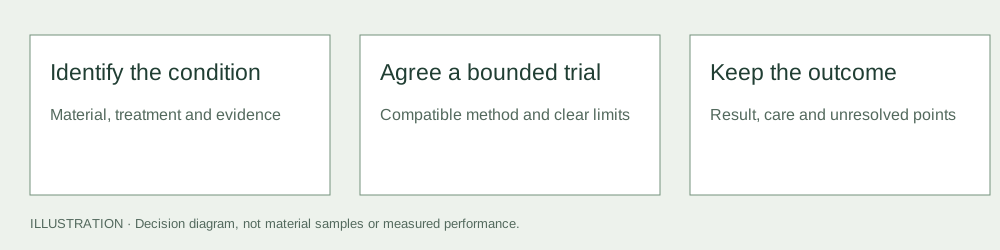
Use a small evidence-led treatment decision
| Question | Record before choosing a method |
|---|---|
| What is the material? | Supplier identity, finish and known resin, sealer or coating |
| Where is the mark? | Overall photo, detail view and nearby objects or water paths |
| What caused it? | Confirmed exposure, plausible causes and unresolved points kept separate |
| What will be tried? | Exact product, applicable instructions and compatibility assessment |
| What is an acceptable result? | Appearance target, trial approval and possible colour or sheen change |
| What prevents recurrence? | Source correction or the limits of what can be resolved |
Where a feature appears connected to the stone’s own minerals, seek specialist assessment rather than promising that a surface clean will stop future change. No permanent remedy is established here for unidentified internal oxidation.
When restoration or replacement needs discussion
Ask a competent stone restorer to assess persistent or recurring marks, changed sheen, uncertain coatings, or a proposed method that could alter the appearance. The specialist should state what a trial can establish and when the result would be too uncertain or visually unacceptable.
Use the general stain-removal guide for the wider distinction between deposits, staining and surface damage. Sealing may be a separate maintenance decision, but it does not identify a rust source or automatically stop moisture entering through the surrounding assembly.
Keep the result and the remaining limits
Retain the product and application record, comparable photographs, any identified source correction and the specialist’s findings. Note whether the change recurs and under which observed conditions, without deliberately recreating a harmful exposure.
For supplied stone, connect the evidence to the receiving inspection and claim guide and the purchaser’s agreed appearance criteria. The presence of a rust-coloured feature does not by itself establish a contractual defect; the actual evidence and specification must settle that decision.
Questions & discussion
Share a question or a useful experience about this guide. Comments appear immediately. Your name and comment are public. Email is optional and stays private; reply emails are not enabled yet. Comment privacy.