
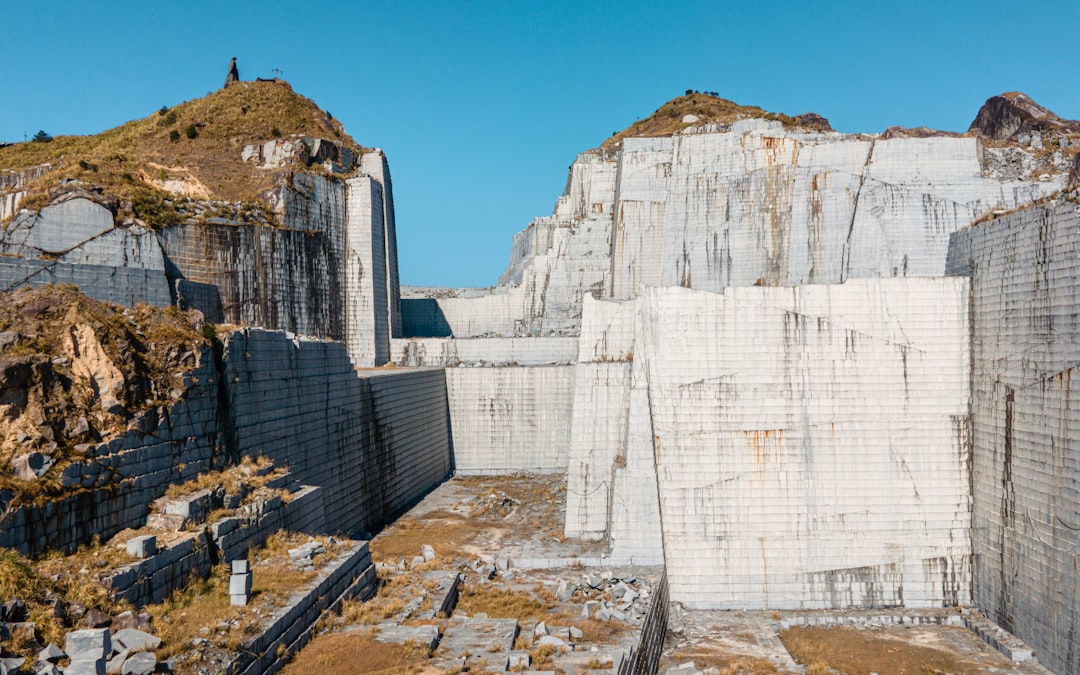
To import granite from China, first define the material and finished product, qualify the supplier, approve representative samples, issue a measurable purchase specification, inspect before shipment, and arrange freight and customs clearance under a clearly stated Incoterm. Do not place an order from a color name and price per square meter alone. Granite is a variable natural material, and the commercial term can cover several geological rock types. The landed cost also depends on fabrication, packing, inland transport, ocean freight, duties, inspections and destination charges. This guide provides a sourcing framework rather than project-specific geological, engineering or customs advice.
Import process at a glance
A controlled purchase normally follows seven stages. Complete the technical and commercial work before paying a production deposit or authorizing shipment.
- Define the product: state whether the order is for gangsaw slabs, cut-to-size panels, calibrated tiles, countertops, steps, paving or another finished form.
- Identify the stone: record the trade name, geological description if known, claimed quarry country, block or lot reference, and approved range samples.
- Qualify the supplier: verify the legal entity, production role, export documentation, bank details and ability to make the specified product.
- Approve samples and drawings: review color range, finish, thickness, edge work, repairs and fabrication details.
- Contract the order: define tolerances, inspection method, packing, Incoterm, documents, payment stages and remedies for nonconforming goods.
- Inspect and load: conduct checks while correction is still possible, then document packing, container loading and the seal number.
- Clear and receive: file destination-country import documents, pay applicable charges and inspect the shipment before distributing or installing it.
Use the broader stone sourcing reference to organize supplier records, approvals and order documentation.
Separate geological identity from the trade name
What “granite” may mean
Geologically, granite is a coarse-grained igneous rock commonly associated with quartz and feldspar. In the dimension-stone trade, however, “commercial granite” is broader and can include other hard crystalline igneous or metamorphic rocks. The U.S. Geological Survey notes that commercial stone definitions are more inclusive than petrographic definitions, while dimension stone is selected and cut to specified size, shape and finish for architectural or engineering use. USGS dimension-stone guidance therefore supports treating rock identity, appearance and finished-product requirements as separate fields.
A trade name is useful for communication but is not proof of mineral composition, quarry source or performance. Similar names may be used for different stones, and a Chinese processor may sell stone quarried in China or material imported from another country. Marketplace listings for Chinese suppliers include both Chinese-named products and stones described as originating elsewhere. The StoneContact China listing can help identify possible products and vendors, but listing content and supplier claims still require independent verification.
Information to request for each stone
- Commercial name and any alternative names used on invoices or packing lists
- Geological or petrographic description, when relevant to the application
- Claimed quarry country and quarry location, without assuming the fabrication location is the origin
- Current block, bundle or production-lot photographs
- Representative range samples showing acceptable light, dark and patterned variation
- Disclosure of resin, mesh backing, fissure filling, patching or other treatment
- Available test reports tied to the named stone and identifiable production source
Browse the granite reference and stone database when comparing names, visual range and material descriptions.
Specify finishes, applications and finished dimensions
Match the finish to the use
Common countertop finishes include polished, honed and leathered surfaces. Flamed, bush-hammered, sandblasted, sawn and tumbled finishes are also offered for architectural or paving work. Finish names alone are not sufficiently precise: gloss, texture, brush intensity and color expression can vary by stone and processing line. Marble.com describes polished surfaces as reflective, honed surfaces as matte and leathered surfaces as textured; it also identifies several rougher finishes used beyond countertops. Its finish overview is a useful visual starting point, not an acceptance standard.
Approve a physical finish sample made from the proposed stone. For textured walking surfaces, have the project designer determine the required slip-resistance criteria and test method. For exterior paving, cladding, stairs or freeze-thaw exposure, application-specific design and performance review should precede purchasing. See the finish library and application guides for planning context.
Build a measurable purchase specification
| Category | Details to put in the purchase order | Acceptance evidence |
|---|---|---|
| Material | Trade name, claimed origin, approved range and lot restrictions | Labeled samples, lot photographs and bundle records |
| Format | Slab, tile, panel, countertop, step, kerb or paving unit | Production list and packing list |
| Dimensions | Length, width, nominal thickness and agreed tolerances | Calibrated measurements from a defined sample size |
| Finish | Polished, honed, leathered, flamed or other approved reference | Signed control sample and production photographs |
| Fabrication | Edges, holes, cut-outs, grooves, mitres, drainer details and piece marks | Approved shop drawings and template checks |
| Appearance | Permitted color range, veining, inclusions, fills and repairs | Dry inspection under agreed lighting |
| Packing | Crate or frame design, separators, moisture protection and labels | Packing photographs and crate manifest |
Do not copy a tolerance from an unrelated product. Tile, countertops, exterior panels and cubic stone have different fabrication and installation requirements.
Verify the supplier and quotation
Confirm who is performing the work
A supplier may be a quarry operator, slab processor, fabricator, exporter, trading company or a combination of these. Request the registered company name, business address, business-license details, invoice entity and beneficiary bank account. Ask which facility will cut, finish, inspect and pack the order. If work is subcontracted, identify the subcontractor and retain the same specification and inspection rights.
Marketplace history, photographs, certificates and video calls can support due diligence, but none proves that a particular order will conform. For a new supplier or technically sensitive project, consider an independent company-document review, factory assessment or pre-shipment inspection. Do not interpret a marketplace badge as government approval or a guarantee of quality.
Normalize quotations before comparison
Give every bidder the same request for quotation. Record the stone, grade or range, dimensions, finish, fabrication, quantity, packing, Incoterm, named location, lead time, payment schedule and document requirements. Clarify whether the price includes templates, drawings, crating, inland haulage, terminal charges, export customs formalities, freight, insurance or destination delivery.
A low unit price may exclude costly items or allow a wider visual range. Compare the total scope rather than ranking quotations by square-meter price. The comparison section can be used to structure product and quotation reviews.
Inspection, testing and quality control
Use testing appropriate to the application
ASTM C615/C615M covers material characteristics, physical requirements and sampling for granite dimension stone used for general building and structural purposes. ASTM also publishes methods addressing properties such as absorption, compressive strength and flexural strength. The active granite specification is listed by ASTM Committee C18. The Natural Stone Institute identifies application-related considerations including absorption, bending strength, abrasion and slip resistance, and advises obtaining testing when suitable data are unavailable. Its laboratory overview lists commonly used dimension-stone test methods.
Do not accept a test report solely because it contains the expected stone name. Check the laboratory, test method and edition, sample date, specimen condition, reported orientation, source identification and relationship between the tested sample and current production. Historical data may be informative but should not automatically be treated as project-specific evidence.
Plan inspections around production risk
- Sample approval: establish material range, finish and permitted treatments before production.
- First-piece inspection: check drawings, dimensions, edges, holes and finish before the full batch is made.
- During-production inspection: monitor shade grouping, thickness, calibration and recurring fabrication defects.
- Pre-shipment inspection: compare completed goods with the order, drawings, samples and packing list.
- Loading supervision: confirm crate identity, bracing, weight distribution, container condition and seal record.
- Receiving inspection: photograph the unopened load, record visible damage and follow the carrier’s claim procedure before moving affected goods.
The contract should define the inspection level, sampling method and response to defects. “Export quality” and “standard tolerance” are not measurable acceptance criteria.
Incoterms, customs and landed-cost factors
Choose an Incoterm with a named place
Incoterms allocate delivery tasks, costs and risks between seller and buyer; they do not replace the product specification, payment terms or remedies for defects. State the rule, named port or place, and version—for example, “FOB named Chinese port, Incoterms 2020.” The U.S. Department of Commerce distinguishes rules for any transport mode from sea and inland-waterway rules and emphasizes identifying the agreed version. Review its Incoterms guidance before comparing EXW, FCA, FOB, CFR, CIF or delivered quotations.
FOB or FCA can provide the buyer with more direct control over the main freight contract, while CIF includes seller-arranged freight and insurance to the named destination port. Neither structure guarantees a lower landed cost. Check what the carrier, forwarder and destination agent will charge outside the supplier’s quotation.
Budget every landed-cost component
- Stone, finishing, fabrication and waste allowance
- Samples, shop drawings, testing and third-party inspection
- Frames, crates, separators, labels and moisture protection
- Chinese inland transport, terminal handling and export charges
- Ocean freight, fuel or equipment surcharges and cargo insurance
- Customs broker, bond, filing and entry charges
- Applicable duty, taxes, trade measures and government fees
- Port, examination, demurrage, detention, storage and chassis costs
- Destination drayage, unloading equipment, warehouse handling and breakage allowance
Granite is dense, so container payload, axle restrictions, crate placement and safe unloading must be planned for the actual shipment. Do not rely on a generic number of slabs per container. Obtain verified piece weights, crate weights, container limits and route restrictions from the supplier, carrier and destination haulier.
U.S. import context
For U.S. entries, classification depends on the product’s composition, form and degree of working; slabs, tiles and fabricated articles should not be assumed to share one tariff treatment. Current duty rates and additional trade measures can change, so confirm the classification and landed-duty calculation before ordering. U.S. Customs and Border Protection states that the importer of record remains responsible for entry accuracy and applicable duties even when a licensed customs broker is used. For vessel cargo, Importer Security Filing information is generally required before loading. CBP’s importer guidance also addresses importer numbers, brokers, shipment examinations and advance planning.
Prepare a commercial invoice, packing list, transport document and origin marking consistent with the actual transaction and goods. Additional records may be requested depending on classification, packaging, routing or government-agency requirements. Importers outside the United States should obtain equivalent advice for their destination jurisdiction.
Final order and shipment checklist
- Confirm that the contract names the legal seller and matches the payment beneficiary.
- Record the commercial stone name, claimed quarry country and fabrication country separately.
- Approve representative range samples and a finish control sample.
- Issue drawings, piece lists, dimensions, tolerances and treatment disclosures.
- Specify the required test methods and reject unrelated or untraceable reports.
- Define inspection timing, sampling, defect categories and corrective action.
- State the Incoterm, named place and Incoterms version.
- Obtain estimated net, crate and gross weights before booking transport.
- Confirm packing, bracing, labels, crate manifests and loading photographs.
- Verify classification, current duties, filing deadlines and origin marking with the importer’s broker.
- Budget destination examinations, delays, unloading and storage contingencies.
- Retain samples, drawings, invoices, inspection reports and loading records.
The safest way to import granite from China is to make the order verifiable at every stage. A complete specification, traceable approvals and shipment records cannot eliminate natural variation or transport risk, but they provide a clearer basis for production control, customs entry and resolution of nonconformity. Continue with the China sourcing section, product formats and technical guides when preparing an order.
Frequently asked questions
What documents are normally needed to import granite from China?
Typical shipment records include a commercial invoice, packing list and bill of lading or other transport document. Depending on the destination, the importer may also need customs-entry data, an importer number, a bond, advance cargo filings, origin marking and supporting classification or valuation records. Confirm the final document set with a customs broker before shipment.
Should I buy Chinese granite on FOB or CIF terms?
Neither term is automatically best. FOB can give the buyer more control over main carriage, while CIF includes seller-arranged freight and insurance to the named destination port. Compare the complete landed cost, insurance coverage, destination charges and operational responsibility, and always state the named port and Incoterms version.
How can I verify granite quality before shipment?
Approve representative range and finish samples, issue measurable dimensions and tolerances, inspect a first piece, and conduct a defined pre-shipment inspection. Verify material appearance, thickness, fabrication, repairs, quantity, packing and labels. For performance-sensitive applications, request relevant, traceable laboratory testing.
Does buying granite from China mean the stone was quarried in China?
No. A Chinese supplier may process or export stone quarried in China or another country. Record quarry country, fabrication country and shipment origin separately, and request supporting traceability rather than relying on the trade name or supplier location.
How is the landed cost of imported granite calculated?
Add the stone and fabrication price to samples, testing, inspection, packing, Chinese inland logistics, freight, insurance, customs duty, broker and bond charges, port fees, examinations, storage, destination delivery, unloading and a reasonable damage or delay contingency. Current duties must be checked against the exact product classification.