
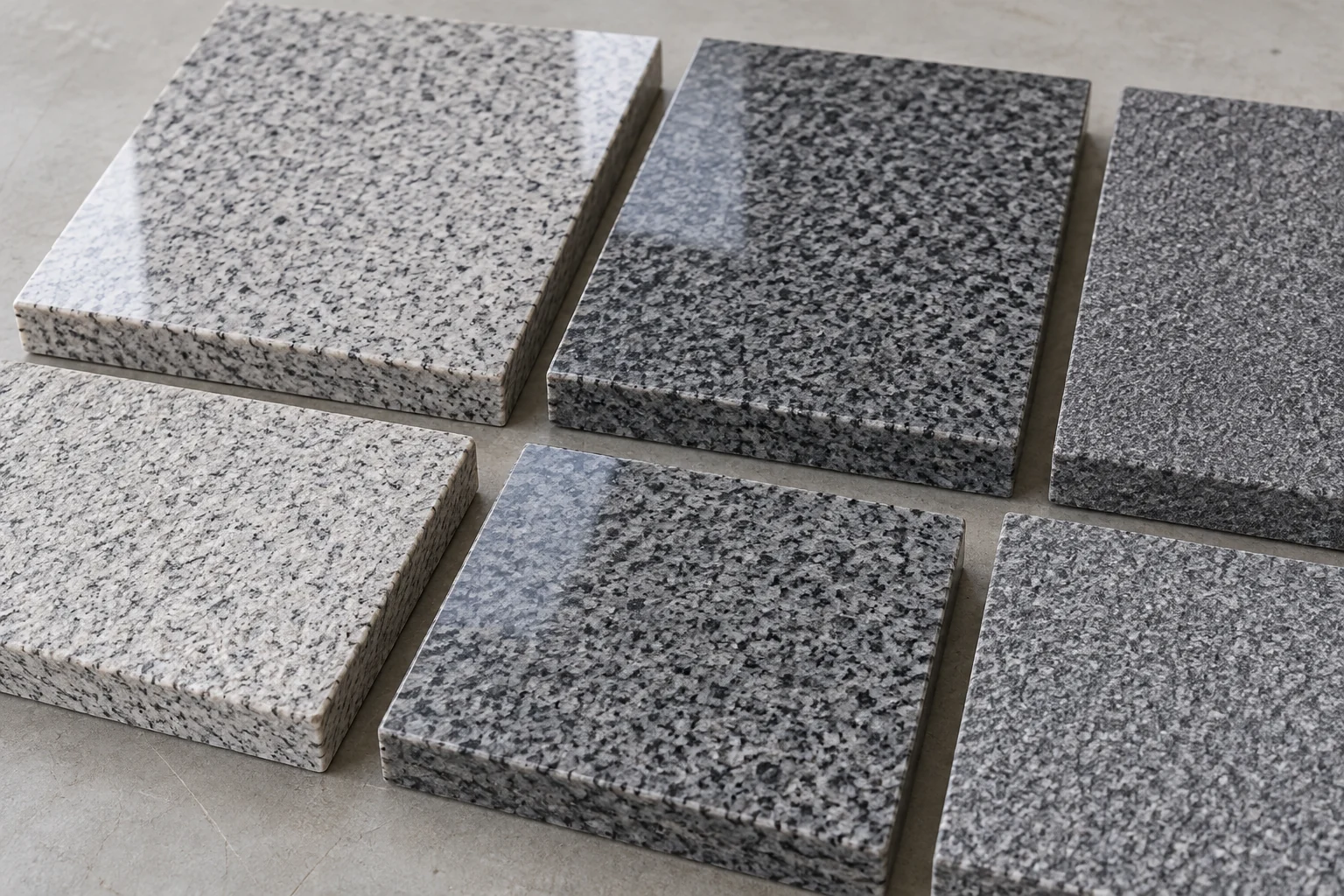
G603 or G654: start with the grey you want
For a light silver-grey field, begin with the G603 / Padang Cristallo examples; for a darker grey contrast, compare the offered G654 selection. The useful decision is the background tone and mineral pattern across a group of pieces, not which code sounds more familiar. Finish and the actual production range belong in that comparison from the start.
| Family anchor | Supplier description | What to compare on the offered pieces |
|---|---|---|
| G603 / Padang Cristallo | Pizrog describes its offering as grey-silver and also uses the name Padang Crystal | Light background, distribution of dark minerals and the spread from pale to darker pieces |
| G654 | SRS describes a dark offering and explicitly markets an alternative to original G654 | Depth of grey, grain contrast and whether a proposed replacement matches the retained reference |
The descriptions are supplier-specific. Neither code fixes a universal grain size or a repeatable shade across sources and years. See the G603 record, G654 record and direct comparison for the naming limits. The Natural Stone Institute also distinguishes commercial names from geological classification: grey colour is not a material identification.
Make the tonal layout part of the selection
For a floor or pavement, decide whether the design needs a blended grey field or deliberately separate light and dark zones. Pizrog’s grey-silver example and the darker G654 offering give starting points, but a few catalogue images cannot define the variation within either delivery.
Pavestone’s shade-variation guidance recommends viewing paving as a laid-out area and dry-laying before permanent installation. Apply that principle to the proposed grey selection: arrange representative pieces together, move strong light or dark concentrations until the intended balance is clear, and photograph the accepted layout. Sorting should make an agreed pattern, not conceal material outside the approved range.
Label the range samples and placement plan with the offered stone, finish and production lot. Record the extraction declaration separately from the processing location, and approve any substitute before it joins the layout. The samples and mock-ups guide covers that reference trail. At receiving, compare the delivered range and piece marks with it before fixing disputed units.
Keep floors, paving and kerbs visually coordinated
On an interior floor, review the shade sequence at entrances, doorways and adjoining rooms, together with the specified face finish. For patios and pavers, check the broader field and its borders rather than approving isolated units. If two greys are intentional, mark their areas and junctions on the placement plan.
For a kerb run, compare adjacent lengths and corners with the paving they frame. Ask for the visible top and side faces in the reference assembly; continuity around a corner is a different selection task from blending a large horizontal field. Keep scheduled pieces associated with their intended positions during packing.
Appearance acceptance remains separate from construction suitability. The HSE flooring guidance links slip risk to the use and foreseeable contamination. The responsible designer must address finish, loading, drainage and assembly. Strength, absorption and other numerical requirements need the offered lot’s own test reports with an identifiable specimen and method; neither a light nor a dark grey label supplies those values.
Match extensions to the earlier batch
When adding a path, extending a floor or replacing a kerb, compare the new pieces with the existing work and a retained original sample under consistent conditions. Put the finish, background shade and mineral distribution beside one another; the original trade code alone is not enough, particularly where a seller offers a G654 alternative. Agree any transition between batches before ordering the extension.
Keep spare-piece identities and the accepted layout with the maintenance record. Before judging an apparent mismatch, identify accumulated dirt, residue or treatment using the Natural Stone Institute’s care guidance. Cleaning compatibility and sealing needs follow the actual stone and surface condition, not the word grey.
Questions & discussion
Share a question or a useful experience about this guide. Comments appear immediately. Your name and comment are public. Email is optional and stays private; reply emails are not enabled yet. Comment privacy.